Screen Time & Use of Technology in Therapy

The use of technology can be controversial in the educational and parenting spaces, especially when it comes to screen time. As a company that makes educational software, we think it is important to have open discussions about when it is and isn’t beneficial to use technology with our children. After all, not all screen time is created equal!
As experts in child development our philosophy is that television programs, apps, YouTube videos, or video games are never a substitute for skilled and individualized assessment or therapy. However, when licensed professionals can use technology as an intentional therapeutic tool that saves them time, makes them more efficient, and is more engaging for the children they serve, everybody wins!
When considering what type of technology is appropriate to use in therapy, how do you determine what is “good” and what should be limited or avoided? In a review of multiple studies on screen time and child development, the Informed SLP found there are two main things to consider, context and content.
Screen Time Considerations
CONTEXT
When deciding on appropriate technology use, the context must be considered. Look at the context and ask:
1. How is the child engaging with the media?
2. Who is the child with?
3. Is this screen time activity replacing something that is more beneficial?
CONTENT
When deciding on appropriate technology use, the content must also be considered. Look at the content and ask:
1. How “busy” is it? Is it auditorily or visually overstimulating?
2. Who makes it and is profiting from it?
3. Does it model strategies for caregivers?
4. What is the child learning?
At Little Bee Speech, we are proud to say that our expertly designed and intuitive software checks all the boxes for “good tech”. Parents and SLPs can set aside their concerns about adding more screen time to a child’s daily routine when they use any of our Little Bee Speech software tools. They can feel confident knowing that our programs are developed with context and content in mind.
Little Bee Speech Software: Consider the Context
How is the child engaging with the media?
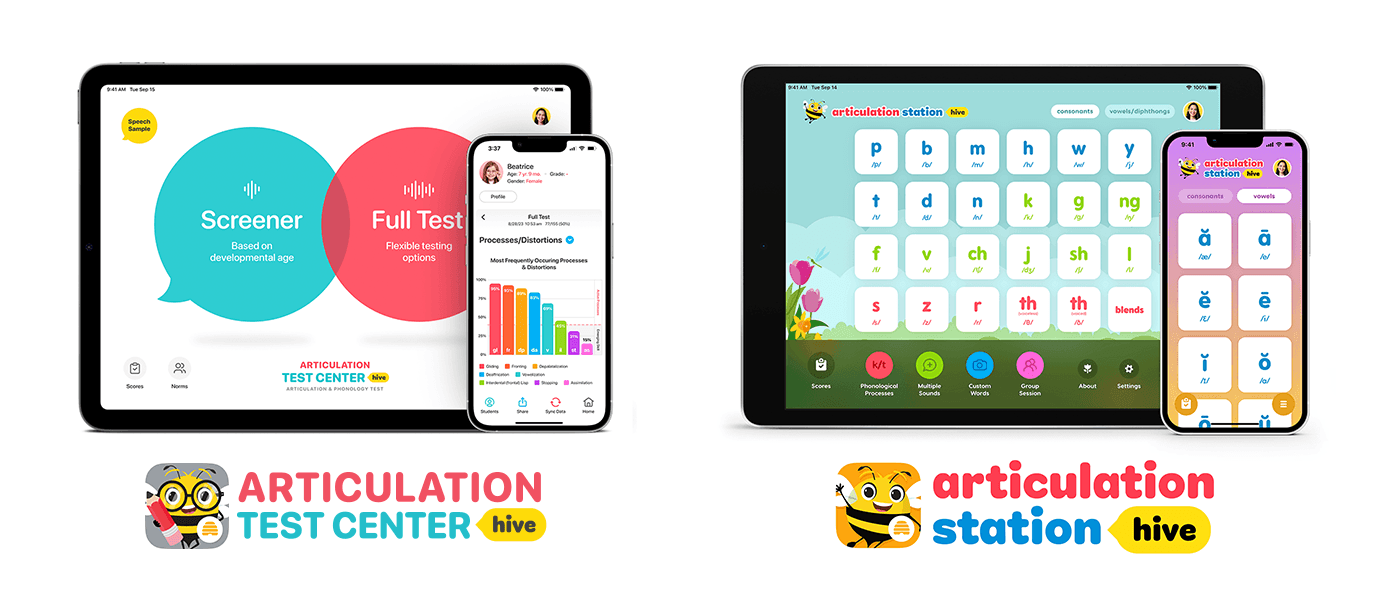
The child engages with Articulation Station Hive as a part of a therapeutic program, with goals specific to their unique needs. When engaging with Articulation Test Center Hive the child is either participating in a comprehensive assessment of their speech sound production to develop a therapeutic program or to check-in on their progress toward their therapy goals.
Who is the child with?
When using these Little Bee Speech software tools, the child is partnered with a speech-language pathologist, speech-language pathology assistant or a parent/caregiver (under the guidance of an SLP).
Is this screen time activity replacing something that is more beneficial?
The focus of the apps in the Little Bee Hive membership (Articulation Test Center Hive and Articulation Station Hive) is to support the child’s speech production skills and to set the SLP or parent up for success when they are working with the child. When it comes to beneficial activities, it doesn’t get much more beneficial than that!
Little Bee Speech Software: Consider the Content
How “busy” is it? Is it auditorily or visually overstimulating?
The apps in our Little Bee Hive Membership have clear, real-life images, animated illustrations and simple activities that are engaging but not overstimulating.
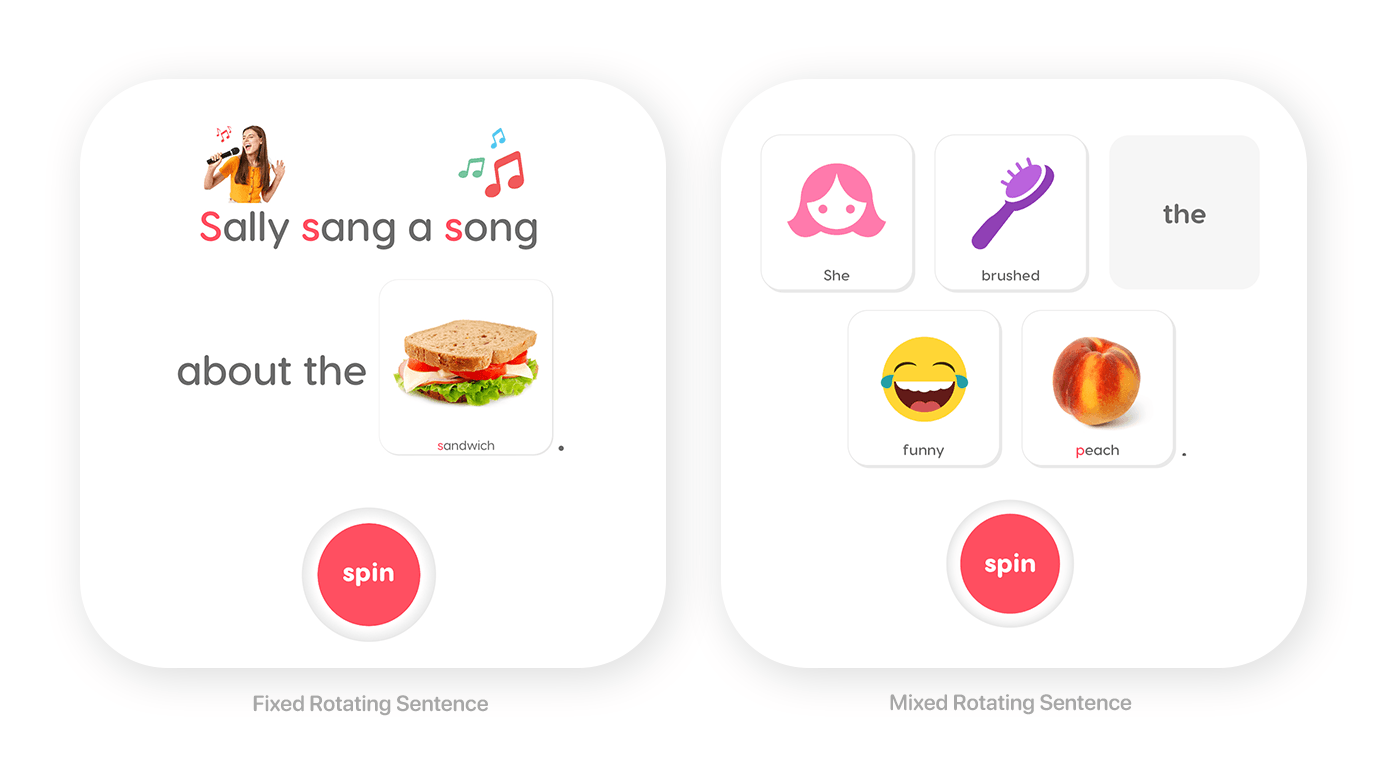
In Articulation Station Hive, the child is provided with comprehensive yet simple activities to support the production of all consonants and vowels from the isolation level to conversational level. For example, in our rotating sentence activity, the child is able to interact with the sentence features by pushing the “spin” button, but the focus is still on sound production.
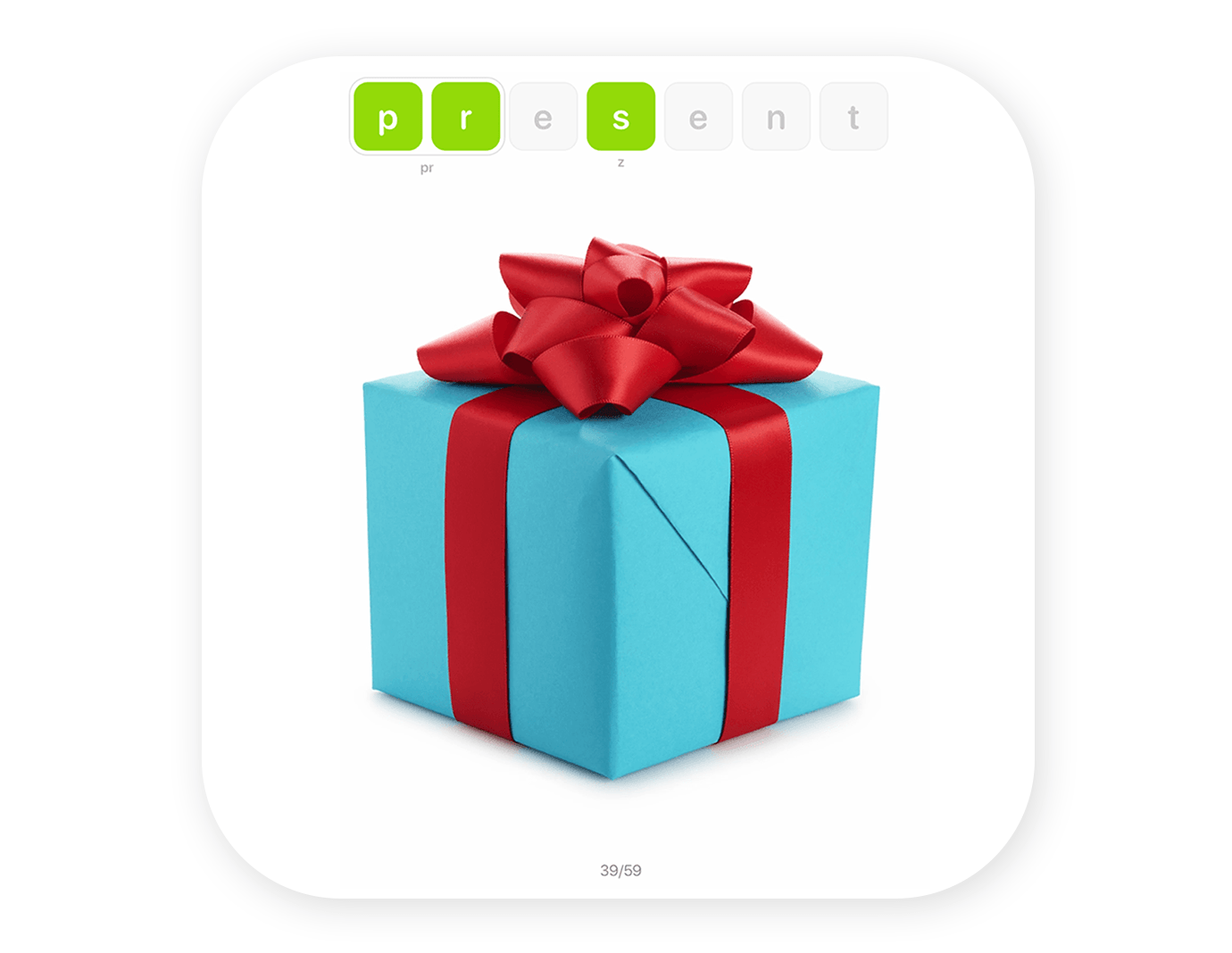
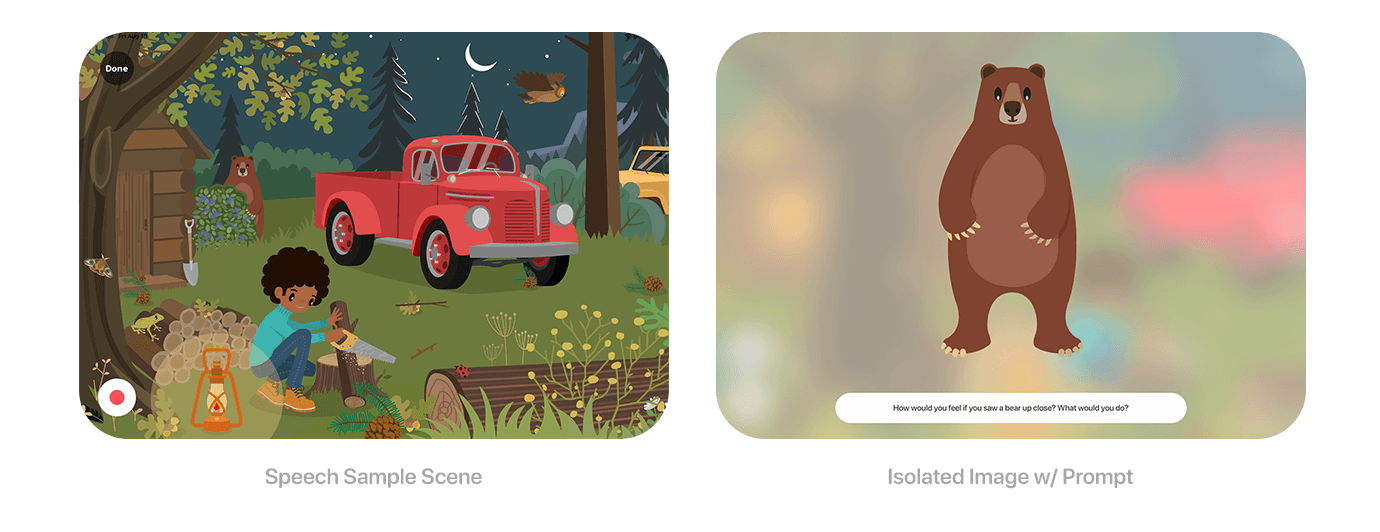
In Articulation Test Center Hive, the clear images and speech sample illustrations are designed to sustain a child’s attention and interest, while still achieving the goal of obtaining a sample of speech production at the single word level and in connected speech.
Who makes it and is profiting from it?
Little Bee Speech software is meticulously designed by licensed and certified speech-language pathologists. We aim to provide fellow speech-language pathologists with thoughtful tools that help them do their job more efficiently and effectively. We use the most up-to-date research and our own clinical expertise to provide SLPs with everything they need to assess and treat speech sound disorders all in one place at an affordable price.
In addition to being SLPs we are also parents. We recognize the importance of teaching and working patiently with our little learners to help them achieve their communication potential. Using effective tools like Articulation Station Hive and Articulation Test Center Hive can make a world of difference for us and them as we help them on their speech journey.
Does it model strategies for caregivers? What is the child learning?
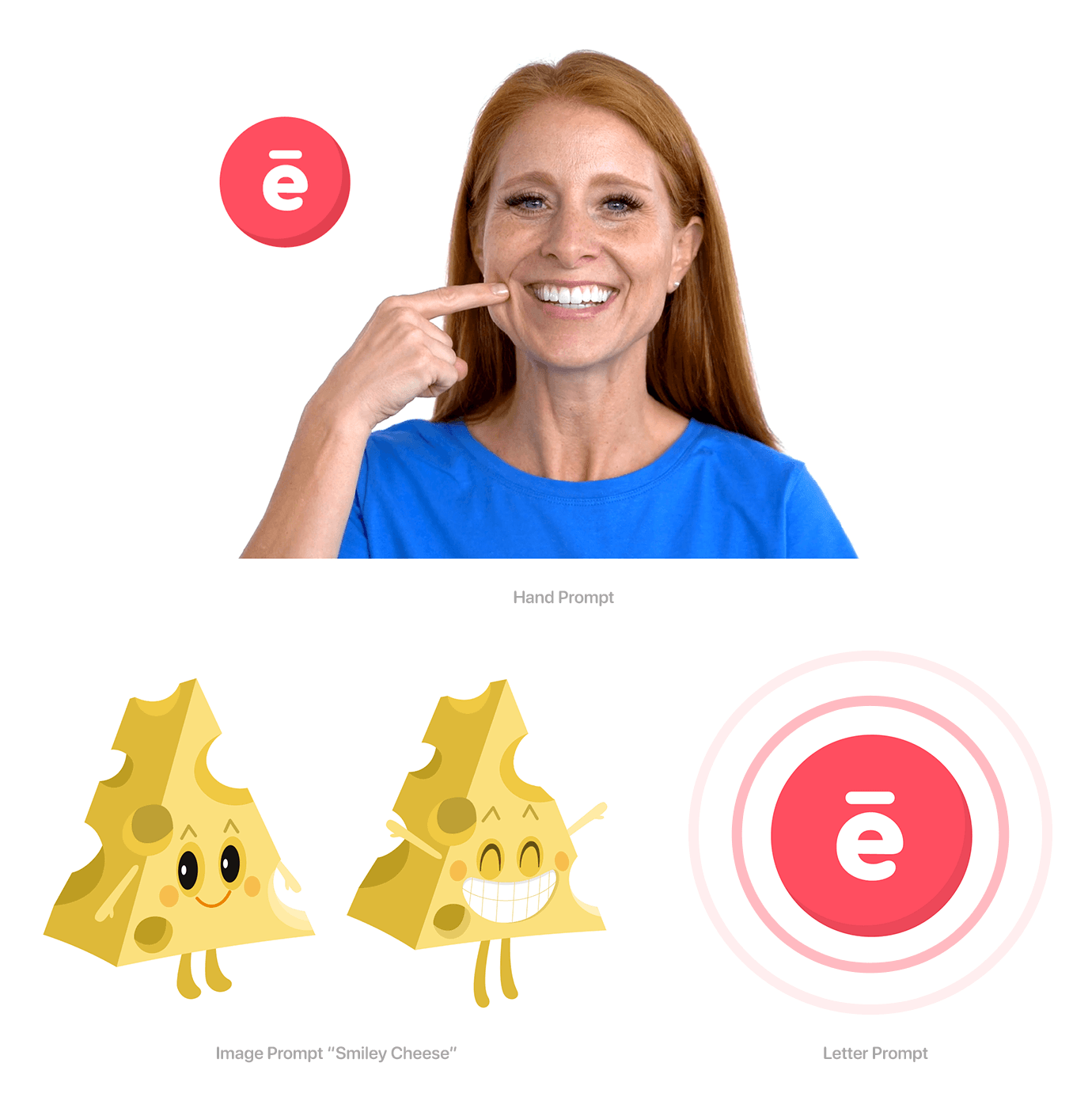
In Articulation Station Hive, we provide built-in strategies for SLPs and parents to support successful sound production. For example, every vowel and consonant has an accompanying picture, hand and letter cue. Every phoneme has a detailed information page filled with these cues, production/placement details, scripts and visuals.
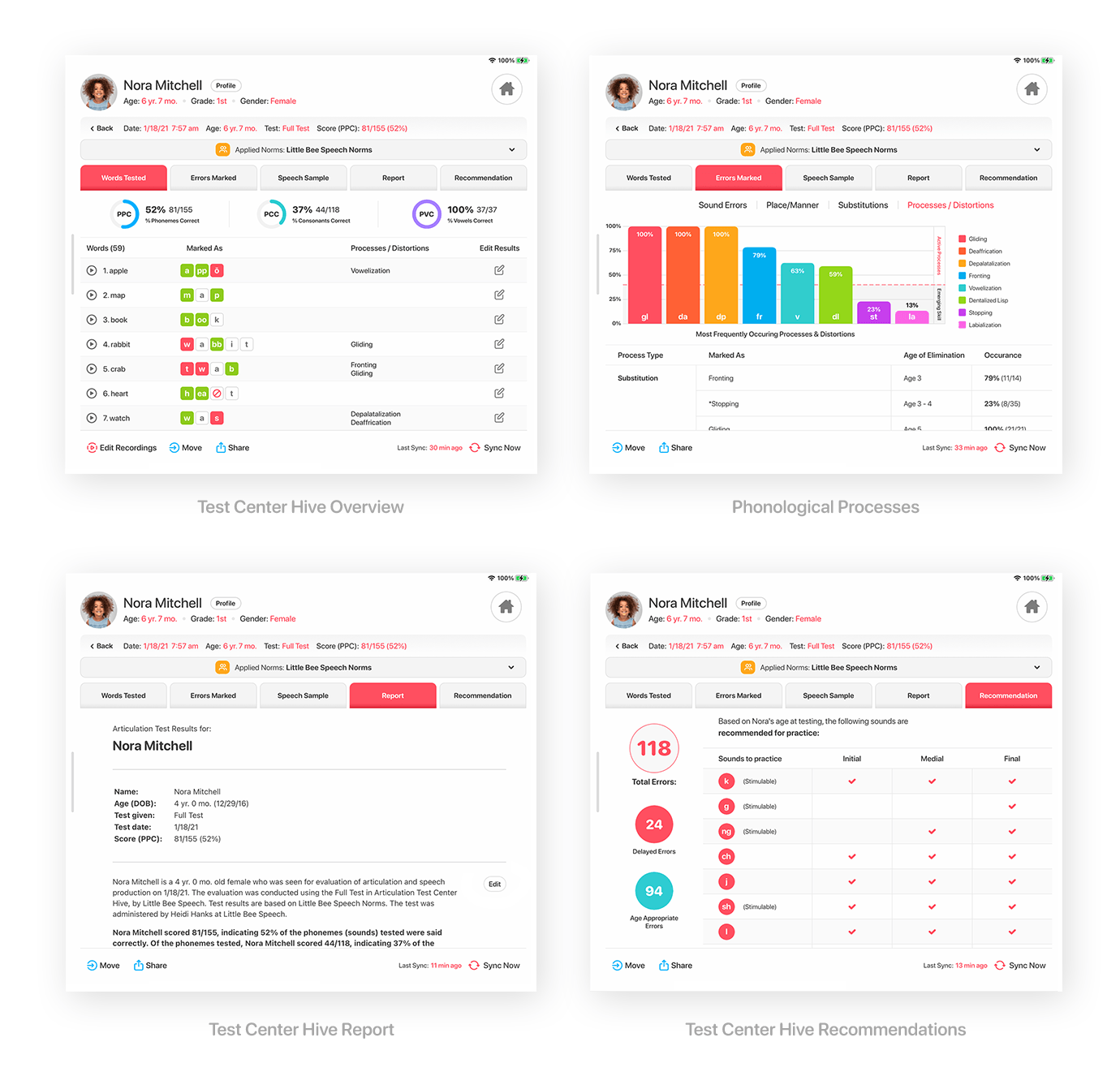
In Articulation Test Center Hive, the detailed data analysis and results support the SLP in making treatment decisions. The results are also easily shareable with parents to support their involvement and understanding of the therapeutic program. A full written report is generated and recommendations for practice are given.
Not all technology is created equal.
Screen time and the use of technology with children should be scrutinized and assessed. Parents and service providers should always consider the context and content when deciding if the use of screens is “okay”. When used as a therapeutic tool, there are wonderful benefits to technology.
Parents and SLPs can feel confident when using Little Bee Speech software tools, knowing that they are professionally designed by SLPs to optimize engagement, efficiency, and the use of evidence-based therapy strategies for treating and assessing speech sound disorders.

Sources:
The Informed SLP – It’s time to talk screen time
Little Bee Hive Membership
The Little Bee Hive (Pro) membership gives you full access to both Articulation Test Center Hive and Articulation Station Hive.
Little Bee Hive Free Trial
You can try Articulation Station Hive and Articulation Test Center Hive FREE for 14 days by downloading them from the Apple App Store on your iPad or iPhone and signing up.
Group Extended Trial
Groups with 5 or more SLPs (e.g., school districts, clinics) qualify for an extended FREE trial. Just fill out this form to get started!